
Why Understanding Drip Edge Installation Cost Matters for Your Home
Drip edge installation cost ranges from $1.50 to $9.00 per linear foot, with total project costs typically falling between $200 and $4,000. The final price depends on timing, materials, and labor. Your roof is your home’s first defense against water damage, yet the drip edge is a commonly omitted component. This metal flashing is a small detail with a huge impact, preventing water from seeping behind gutters, rotting fascia boards, and causing costly leaks. Understanding drip edge costs helps you protect your home proactively, and the team at 12 Stones Roofing & Construction is here to guide Pasadena homeowners through the process.
The cost difference is dramatic: installing drip edge during a new roof installation is significantly cheaper ($1.50-$3.00/linear foot) than retrofitting it later ($5.00-$9.00/linear foot). Adding it to an existing roof requires removing shingles, driving up labor costs and pushing the total to $3,000-$4,000 for a standard home.
Material choice also affects the price. Aluminum and galvanized steel are affordable and durable ($0.50-$1.00/linear foot), while copper offers premium aesthetics and longevity at a higher price ($3.50-$9.50/linear foot). For Gulf Coast homes facing severe weather, the right material is crucial for long-term protection.
I’m Jason Roberts, owner of 12 Stones Roofing & Construction. For over a decade, I’ve seen how understanding drip edge installation cost helps homeowners make smart investments and avoid unexpected repairs. My team specializes in providing Pasadena property owners with transparent, expert guidance on these critical decisions.

What is Drip Edge and Why is it Non-Negotiable?
A drip edge is a metal flashing installed at the edges of a roof to direct water away from the fascia and into the gutters. Its primary purpose is to prevent water from clinging to the underside of the roof’s edge or seeping behind the gutters, ensuring it flows away from the home’s foundation. In a region like Pasadena, TX, with heavy rainfall and high humidity, this simple component is non-negotiable for protecting your home.
The Purpose of This Unsung Hero
A drip edge serves several critical functions that protect your home’s structural integrity:
- Water Diversion: It guides rainwater efficiently into your gutters, preventing it from running down the fascia board.
- Fascia and Roof Deck Protection: It shields the wooden fascia board from moisture that leads to rot and decay. It also prevents water from wicking back under the shingles and damaging the roof decking.
- Pest Barrier: Drip edge seals the gap between the roof deck and fascia, blocking entry for insects, birds, and rodents.
- Wind and Storm Protection: It helps secure the lower edge of your shingles, providing extra resistance against wind uplift during severe Texas storms.
- Structural Longevity: By protecting key components from moisture, drip edge contributes to the longevity of your entire roofing system.
The Cost of Neglect: Consequences of Omission
Omitting drip edge can lead to a cascade of expensive problems:
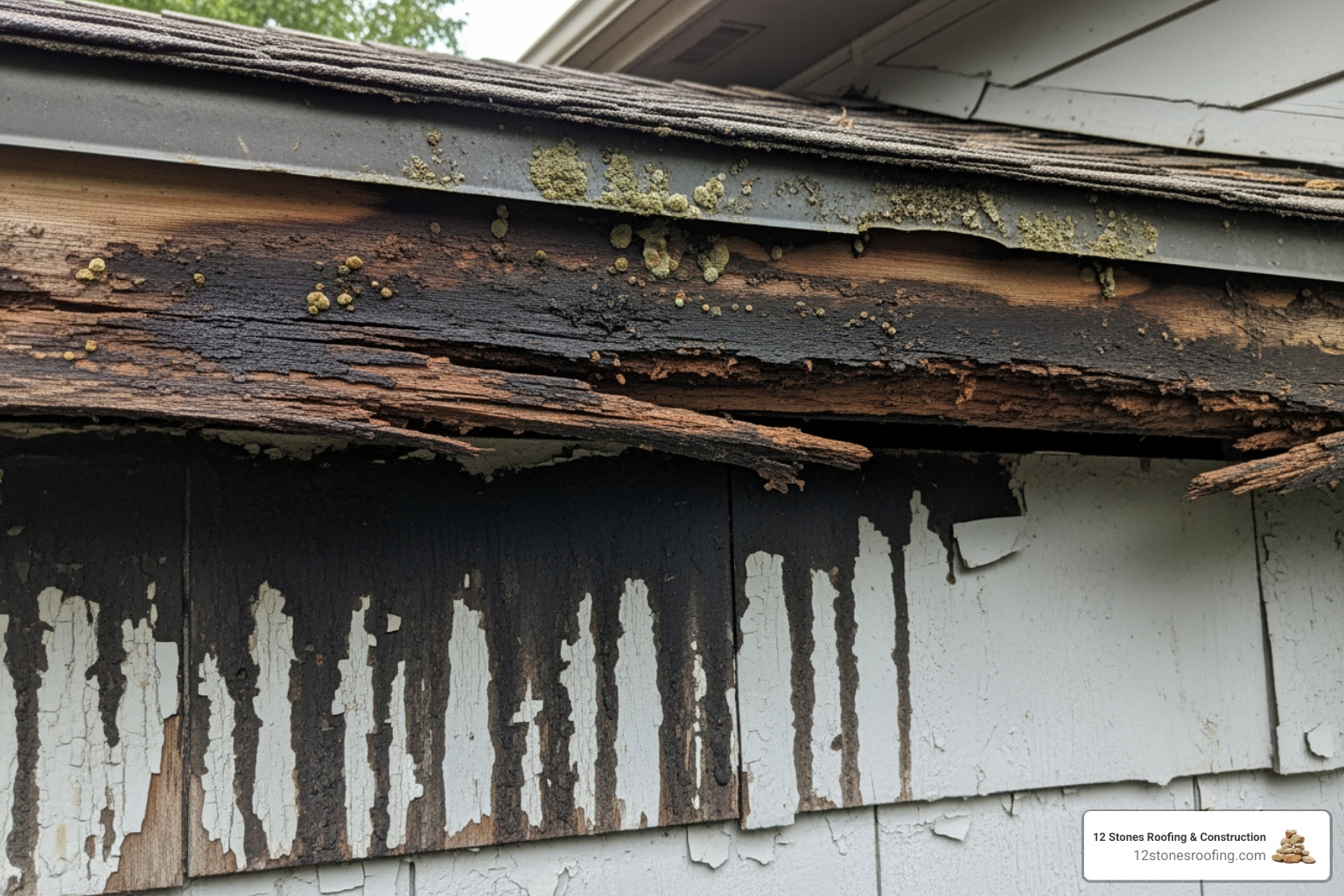
- Rot and Decay: The fascia board and roof decking edges are the first to suffer, compromising your roof’s structural support and requiring costly replacement.
- Widespread Water Damage: Water that misses the gutters can stain siding and erode your foundation. Once it penetrates the roof deck, it can cause interior leaks, mold growth, and other costly water damage repairs.
- Pest Infestations: Unsealed gaps become entry points for pests, leading to insulation damage and health risks.
- Premature Roof Failure: Without proper water management, the lifespan of your shingles and underlayment is significantly reduced, forcing a premature roof replacement.
The U.S. Environmental Protection Agency’s Moisture Control Guidance for Building Design, Construction and Maintenance highlights that managing water is key to preventing structural damage. With water damage affecting about 14,000 people in the U.S. daily, a drip edge is a small investment that protects your entire home.
The Complete Drip Edge Installation Cost Breakdown
On average, drip edge installation costs between $1.50 and $9.00 per linear foot, with total project costs for a typical home ranging from $200 to over $4,000. This wide range is due to the timing of the installation, material choice, and roof complexity.
New Roof vs. Existing Roof: A Tale of Two Prices
The single biggest factor influencing your drip edge installation cost is whether it’s part of a new roof installation or a retrofit.
-
New Roof Installation Cost: Expect to pay $1.50 to $3.00 per linear foot when installing drip edge during a new roof project.
- Integrated Process: The drip edge is seamlessly integrated while the roof deck is exposed. It’s an efficient part of the workflow.
- Lower Labor: The labor is minimal as the crew is already on-site and equipped for the larger roofing project.
-
Existing Roof Retrofit Cost: Adding drip edge to an existing roof is more labor-intensive, increasing the cost to $5.00 to $9.00 per linear foot.
- Labor-Intensive: This process requires carefully lifting or removing the bottom rows of shingles to install the drip edge properly, which takes time and skill.
- Potential for Damage: There’s a higher risk of damaging older, brittle shingles during a retrofit, which could add repair costs.
The best time to install drip edge is during a full roof installation for maximum protection and cost-effectiveness.
Material and Style: How Your Choices Impact the Drip Edge Installation Cost
The material and style of drip edge also play a significant role in the overall cost.
Material Costs:
- Aluminum: The most common and cost-effective option at $0.50 to $1.00 per linear foot. It’s lightweight, durable, and highly corrosion-resistant, making it ideal for Pasadena’s humid climate. It also comes in various colors.
- Galvanized Steel: Priced similarly to aluminum at $0.50 to $1.00 per linear foot, galvanized steel offers excellent durability and is preferred in high-wind areas.
- Copper: A premium material costing $3.50 to $9.50 per linear foot. Copper provides exceptional longevity and a distinct aesthetic, developing a beautiful patina over time.
Drip Edge Styles:
The profile of the drip edge affects its function. The most common types are:
- Type-D (Hemmed): A popular style with a hemmed edge for extra rigidity and a clean finish.
- Type-F (Gutter Apron): Extends further down the fascia for superior protection, ensuring water flows directly into the gutter.
- L-Style: A basic, cost-effective L-shaped profile that effectively diverts water.
For homes with metal roofing, specialized drip edge profiles are used to ensure compatibility, with material costs following the same general ranges.
Here’s a quick comparison of common drip edge materials:
| Material | Cost (per linear foot) | Durability | Corrosion Resistance | Aesthetics |
|---|---|---|---|---|
| Aluminum | $0.50 – $1.00 | Good | Excellent | Many colors, blends well |
| Galvanized Steel | $0.50 – $1.00 | Very Good | Good | Standard metallic finish |
| Copper | $3.50 – $9.50 | Excellent | Excellent | Premium, develops rich patina over time |
Labor, Roof Size, and Complexity: The Final Cost Factors
The final variables shaping your cost are labor, roof size, and complexity.
Labor Costs:
- New Roof Labor: Typically $1.00 to $2.00 per linear foot when part of a larger roof replacement.
- Retrofit Labor: Jumps to $3.00 to $7.00 per linear foot due to the extra work of lifting existing shingles.
Roof Size:
The longer the perimeter of your roof (eaves and rakes), the more material you’ll need. A standard home may have 100-200 linear feet of roof edge.
Roof Complexity:
- Steep Pitch: Requires more safety precautions and slower work, increasing labor costs.
- Gables and Valleys: A complex roof with many angles requires more cuts and precise fitting, adding to installation time.
- Multi-Story Homes: Working on second stories requires more equipment and safety protocols, which can increase labor costs.
For homeowners in Pasadena, TX, local labor rates and common roof styles are key considerations. When you’re ready to explore your options, find local roofing professionals who understand these nuances.
Are You Legally Required to Have Drip Edge?
For most homeowners in Pasadena, TX, the answer is yes—drip edge is a building code requirement, not just a best practice.
Building Code Requirements
The 2021 International Residential Code (IRC), under section R905.2.8.5, mandates drip edge for asphalt shingle roofs. Key specifications include:
- A minimum 2-inch overlap between sections.
- Extension of at least 1/4 inch below sheathing and 2 inches onto the roof deck.
- Mechanical fastening every 12 inches.
- Specific placement relative to the underlayment at eaves and rakes.
State and Local Adoption: Texas Building Codes
Texas has adopted the IRC, meaning adherence to these drip edge requirements is mandatory in Pasadena and surrounding areas. Reputable contractors will always perform installations that meet or exceed local codes.
Home Inspection and Insurance Compliance
Beyond legal mandates, drip edge compliance is critical for practical reasons:
- Home Inspections: When buying or selling a home, inspectors check for code compliance. A missing drip edge is a red flag that can delay a sale or force pre-closing repairs.
- Insurance Requirements: Many insurance providers require a code-compliant roof to qualify for coverage. A properly installed drip edge reduces the risk of water damage claims, which is favorable for your policy.
Cutting corners by omitting drip edge puts your home at significant risk. We always install drip edge correctly and to code, ensuring your home is protected and compliant.

How to Save Money on Your Drip Edge Installation
Managing home improvement costs is important. When it comes to drip edge installation cost, you can use smart strategies to save money without compromising quality.
Here are our top tips for saving on drip edge installation:
- Install During a Roof Replacement: This is the most significant way to save. Integrating drip edge into a new roof project drastically reduces labor costs, as the crew is already on-site and the roof is prepped.
- Choose Cost-Effective Materials: While copper is a premium option, aluminum and galvanized steel provide excellent, durable protection at a fraction of the cost. For most Pasadena homes, aluminum offers a fantastic balance of performance and price.
- Get Multiple Detailed Estimates: Always get at least three itemized estimates from reputable contractors. This allows you to compare material costs, labor, and other fees. Be wary of unusually low bids, as they often signal shortcuts.
- Avoid DIY Pitfalls: Installing drip edge requires working at heights and understanding building codes to ensure a watertight seal. Improper installation can cause more damage than having no drip edge at all, turning a small saving into a major expense.
- View Professional Installation as an Investment: A professionally installed drip edge prevents future expenses. It’s a preventative measure that can save you thousands in potential costly water damage repairs, pest control, and premature roof failure.
By following these tips, you can reduce your drip edge installation cost while equipping your home with this vital protection. When you’re ready, reach out for a transparent and detailed quote.
Frequently Asked Questions About Drip Edge Installation Cost
Here are answers to common questions we receive about drip edge cost and installation.
When is the best time to install drip edge?
The most cost-effective time to install drip edge is during a new roof installation. Integrating it into the project saves significantly on labor and ensures the entire roofing system is sealed correctly from the start. Adding drip edge is a seamless step when the old roof is already removed.
Can I add drip edge to an existing roof?
Yes, but retrofitting drip edge onto an existing roof is a complex and expensive repair. The process involves carefully lifting or removing the first few rows of shingles, which increases labor costs to $5 to $9 per linear foot. This carries a risk of damaging existing shingles, especially if they are old or brittle, and can cost $3,000 to $4,000 for a standard home.
Do metal roofs need a drip edge?
Yes, roofing professionals universally recommend a drip edge for metal roofs, even if some codes don’t strictly require it with a large overhang. It provides an essential extra layer of protection against wind-driven rain and water wicking, safeguarding the roof deck and fascia. For the extreme weather in Texas, this protection is invaluable.
Protect Your Investment with Professional Drip Edge Installation
The drip edge installation cost is a small price for crucial protection against thousands of dollars in potential water damage. Understanding the cost factors—timing, materials, and labor—helps you budget for this vital component. Installing it during a new roof installation is the most economical choice to shield your home’s fascia, soffit, and foundation from the elements.
Neglecting drip edge leads to rot, leaks, and pest infestations. For homeowners in Pasadena, TX, a properly installed drip edge is an indispensable part of a resilient roofing system. At 12 Stones Roofing & Construction, we provide transparent pricing and expert craftsmanship based on local building codes and climate challenges.
For expert advice and a transparent quote in the Pasadena, TX area, trust our team. Call us today at (832) 702-0202 or schedule your professional roof installation online.