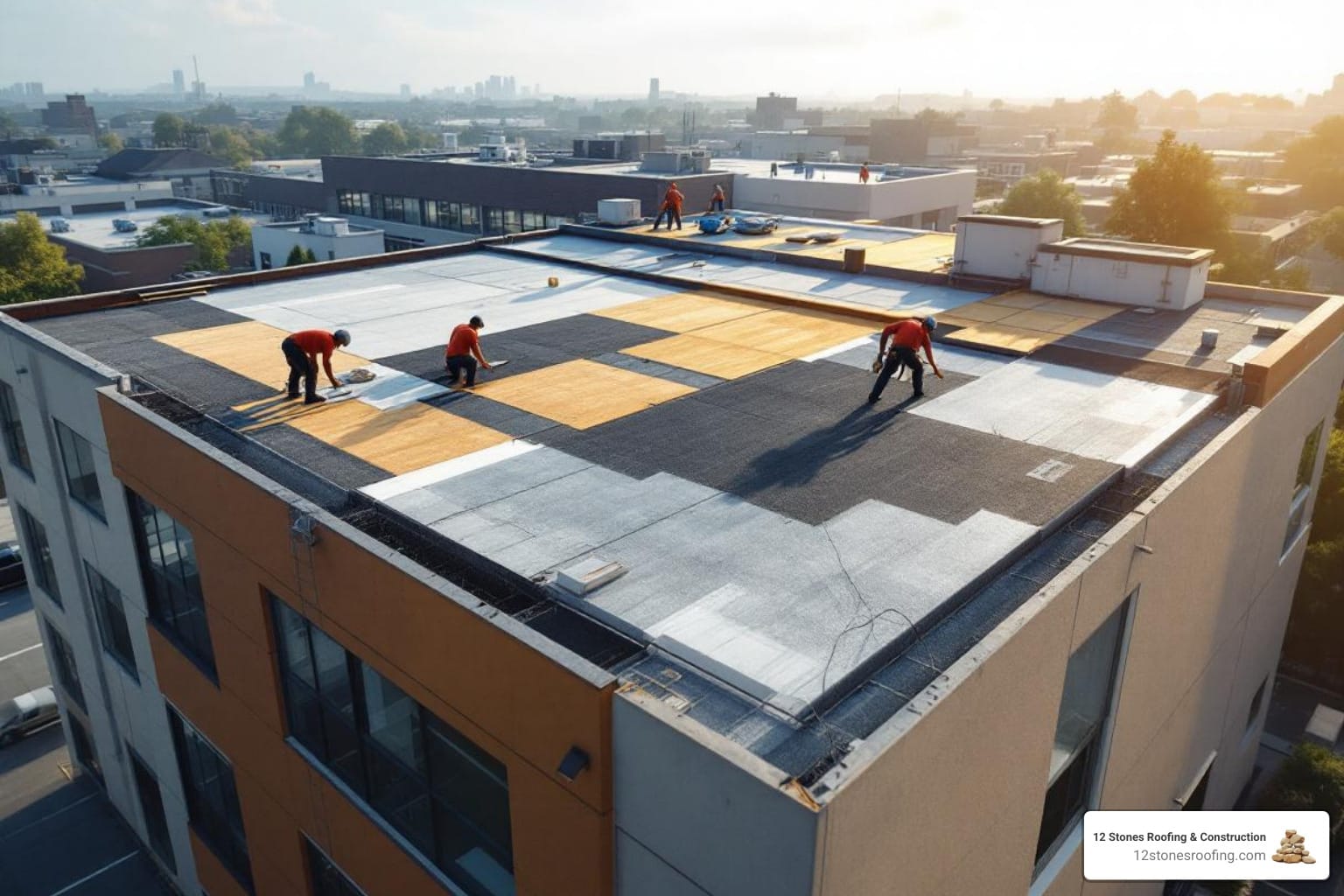

Why Commercial Emergency Tarping Is Your First Line of Defense After Roof Damage
Commercial emergency tarping is the fastest way to stop roof damage from turning into a full-blown disaster for your business. By quickly sealing the damaged area with a heavy-duty, waterproof barrier, you prevent water intrusion, protect equipment, and keep operations running while permanent repairs are arranged. For Texas property owners comparing options for professional roof protection and emergency response, the team at 12 Stones Roofing & Construction provides a locally focused, code-compliant solution built around Gulf Coast weather realities.
Commercial emergency tarping is a temporary protective measure that secures your damaged roof immediately after a storm, fire, or structural failure. It prevents water intrusion, protects your inventory and equipment, and buys you time to plan for permanent repairs—all while supporting your insurance claim.
Quick Answer: What Is Commercial Emergency Tarping?
- Purpose: Temporary roof protection to prevent further damage after a disaster
- Timeline: Typically lasts up to 90 days when professionally installed
- Materials: Heavy-duty vinyl tarps (10+ mil), reinforced grommets, wood planks, industrial fasteners
- Who Should Install: Licensed professionals with commercial roofing experience
- Insurance: Most commercial policies cover emergency tarping as damage mitigation
- Response Time: Professional crews can respond 24/7, often within hours
When severe weather strikes the Gulf Coast, how quickly you secure your roof can mean the difference between a manageable repair and a catastrophic loss. In 2022 alone, storms caused $165 billion in damages across the United States, underscoring the urgent need for immediate action. The National Oceanic and Atmospheric Administration tracks these billion-dollar disasters in detail, and its data confirms that wind and water are the dominant drivers of commercial property losses.
A compromised commercial roof exposes your business to water damage, mold, theft, and costly downtime. A small puncture can quickly escalate into thousands in losses. Emergency tarping is the critical stopgap that shields your assets while you plan a long-term fix. For Texas business owners, professional tarping is essential. Commercial roofs are large, complex, and house expensive equipment, requiring specialized expertise to protect your commercial roofing investment.
As Jason Roberts, Owner of 12 Stones Roofing & Construction, I’ve led emergency response teams across the Gulf Coast for over a decade, deploying commercial emergency tarping solutions that have saved businesses from devastating secondary damage. My team and I understand the urgency and precision required to protect your property when every minute counts.
Commercial emergency tarping terms to learn:
What is Emergency Roof Tarping and Why Is It a Critical First Response?
Emergency roof tarping is the immediate placement of a durable, waterproof membrane over a damaged commercial roof. Its primary goal is to prevent further water intrusion into your property. Think of it as a temporary bandage for your roof, holding the line against the elements until permanent repairs can be made.
Why is this so critical? Every drop of water that enters your building can compound the damage, leading to expensive mold remediation, ruined inventory, damaged equipment, and even a weakened structure. By acting quickly, commercial emergency tarping mitigates these risks, preserving your assets and helping to keep your business operational. Research on disaster recovery consistently shows that businesses that engage mitigation services within the first 24–72 hours after damage resume normal operations faster and at lower total restoration cost than those that delay. It’s a crucial step for your commercial roof repair strategy.
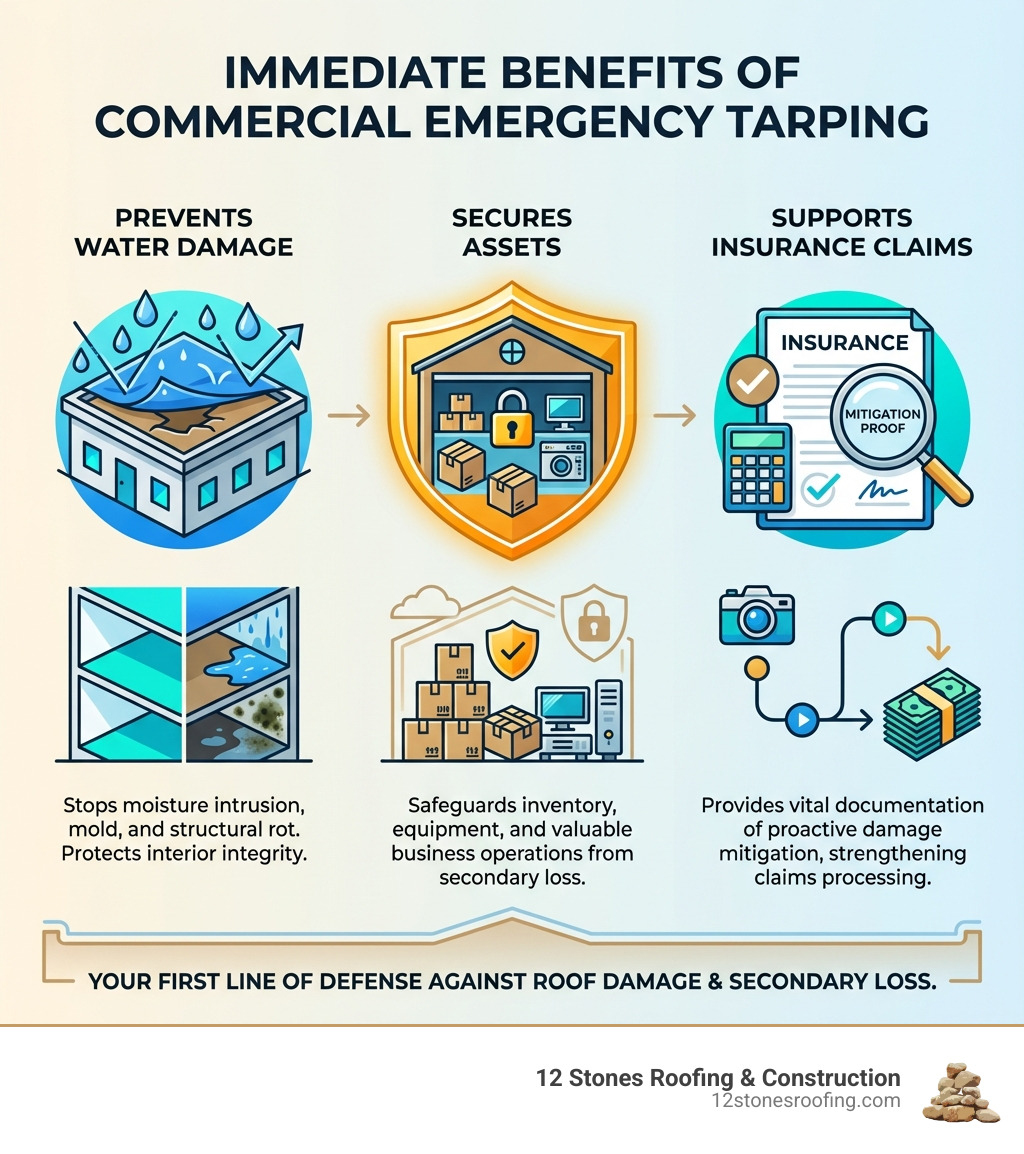
The Immediate Benefits of Securing Your Property
The moments immediately following roof damage are a race against time. The quicker you secure your property, the more benefits you’ll reap:
- Prevents Further Damage: A properly installed tarp creates a watertight seal, stopping rain and debris from entering and halting water damage to interiors, equipment, and inventory.
- Mitigates Secondary Issues: It prevents water intrusion, which significantly reduces the risk of mold growth (starting in 24-48 hours), pest infestations, and damage to insulation.
- Secures Your Assets: Protects business assets like documents, machinery, and inventory from the elements, helping maintain continuity and reduce financial loss.
- Supports Insurance Claims: Taking immediate action demonstrates due diligence to your insurer, which can streamline claims and prevent denials for negligence.
- Reduces Restoration Costs: A small investment in emergency tarping can save tens of thousands in future restoration costs by minimizing the initial damage.
- Provides Peace of Mind: Knowing your property is temporarily secured provides peace of mind, allowing you to focus on recovery and planning.
- Deters Theft and Vandalism: A tarped roof signals the property is secured, not abandoned, deterring theft and vandalism.
For a comprehensive overview of how these benefits integrate into a larger recovery plan, see our Emergency Roofing Services Complete Guide.
How Tarping Supports Your Insurance Claim
Navigating insurance claims after property damage can be complex, but emergency tarping can be your guiding light. Most commercial property insurance policies contain a “duty to mitigate damages” clause, meaning you must take reasonable steps to prevent further damage. Failing to do so could lead to a reduced or denied claim.
Emergency tarping directly fulfills this duty. This proactive approach serves several key functions for your claim:
- Proof of Proactive Measures: Your actions show the insurance adjuster you took responsible steps to protect the property, which can build trust and expedite the process.
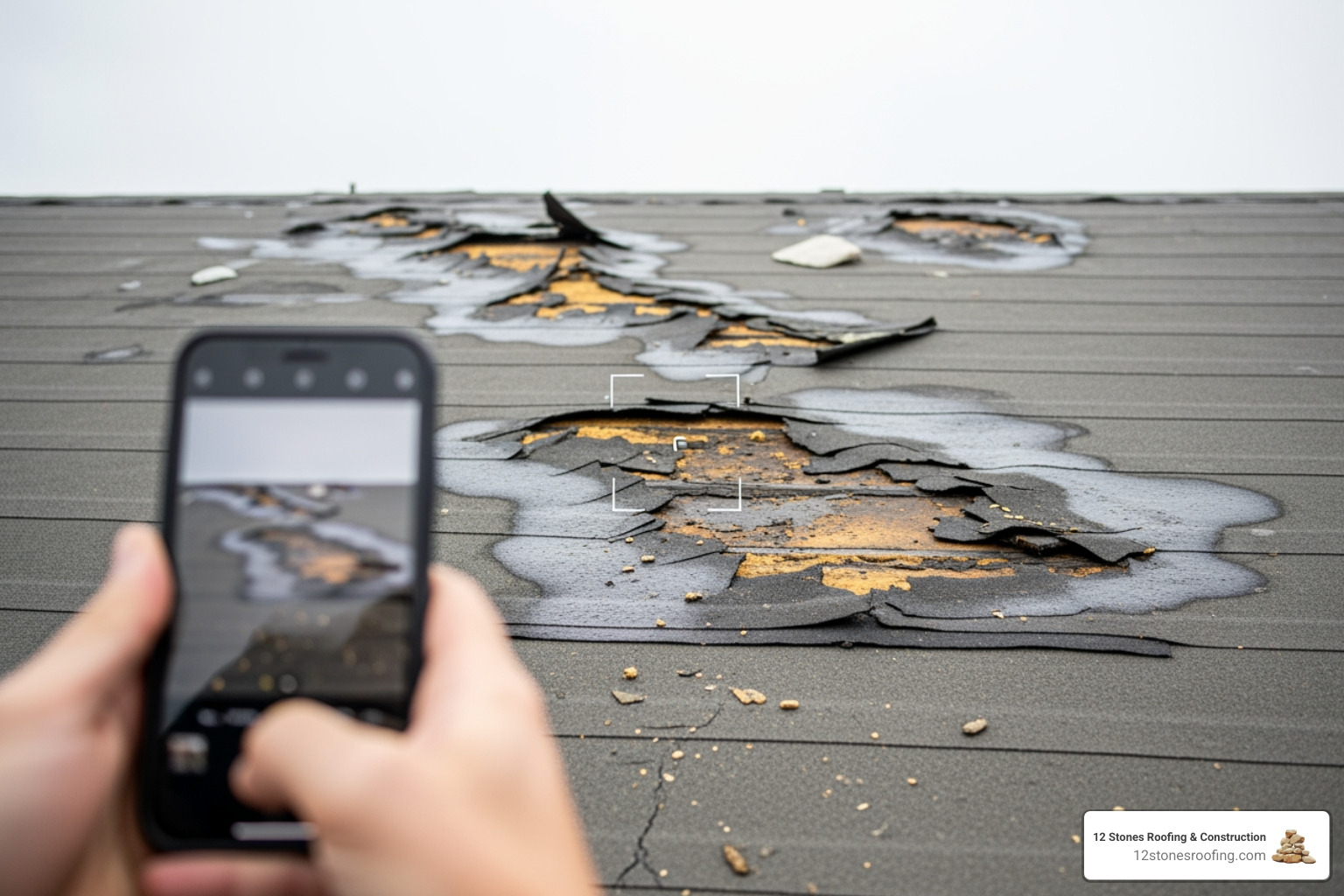
- Essential Documentation: Professional tarping services document pre-tarping damage with photos and videos. This evidence, along with receipts, gives adjusters a clear picture of the initial damage.
- Justifies Costs: The cost of emergency tarping is almost always covered by commercial insurance as a necessary expense to prevent greater loss.
- Prevents Claim Denial: Neglecting to secure a damaged roof can be seen as negligence. If more damage occurs because no temporary measures were taken, the insurer might argue the additional damage was preventable and not covered.
Board-up and tarping services help ensure commercial spaces do not experience further damage while waiting for insurance-covered restoration. It’s a smart, strategic move that protects your property and financial interests.
Commercial vs. Residential Tarping: Key Differences You Need to Know
While the goal of tarping—preventing water intrusion—is the same for residential and commercial properties, the execution, materials, and expertise required differ significantly. Applying residential techniques to a commercial roof is like using a band-aid for a broken bone; it won’t suffice.
| Feature | Commercial Tarping | Residential Tarping |
|---|---|---|
| Scale & Access | Large, often flat or low-slope roofs; complex access (HVAC, vents, skylights) | Smaller, typically sloped roofs; simpler access (ladders) |
| Materials | Heavy-duty, UV-resistant vinyl (10+ mil), woven polyethylene, reinforced grommets | Standard polyethylene (6-8 mil), less durable, often blue or silver |
| Fastening | Nail-free options (ballasts, strapping), wood planks, rubber-washer screws | Nailing wood planks to fascia/roof deck, sandbags |
| Safety | OSHA compliance, fall protection, specialized equipment (lifts, cranes) | Basic ladder safety, personal fall arrest systems (often optional for DIY) |
| Liability | High liability for workers, property, and business operations | Lower liability, primarily for homeowner/DIYer |
| Insurance | Stricter requirements for mitigation, detailed documentation crucial | More flexible, but documentation still important |
Why Commercial Emergency Tarping Requires Specialized Expertise
The distinctions above highlight why commercial emergency tarping is not a DIY job. It demands specialized knowledge:
- Flat Roof Challenges: Tarping flat roofs requires managing drainage to prevent water pooling, which can cause collapse. Professionals secure tarps without puncturing the roof membrane.
- Complex Drainage Systems: Tarps must be installed to work with complex drainage systems (scuppers, internal drains) to ensure proper water runoff.
- Rooftop HVAC and Equipment Obstacles: Professionals must carefully tarp around heavy HVAC units, fans, and skylights to create a watertight seal without causing damage.
- Heavier, Larger Tarps: Commercial roofs require large, heavy, durable tarps. Maneuvering them, especially in wind, requires a skilled crew and proper equipment. Vinyl tarps are often preferred for their durability.
- Structural Load Considerations: Professionals assess the roof’s structural integrity to ensure the weight of the tarp, materials, and crew doesn’t cause further damage.
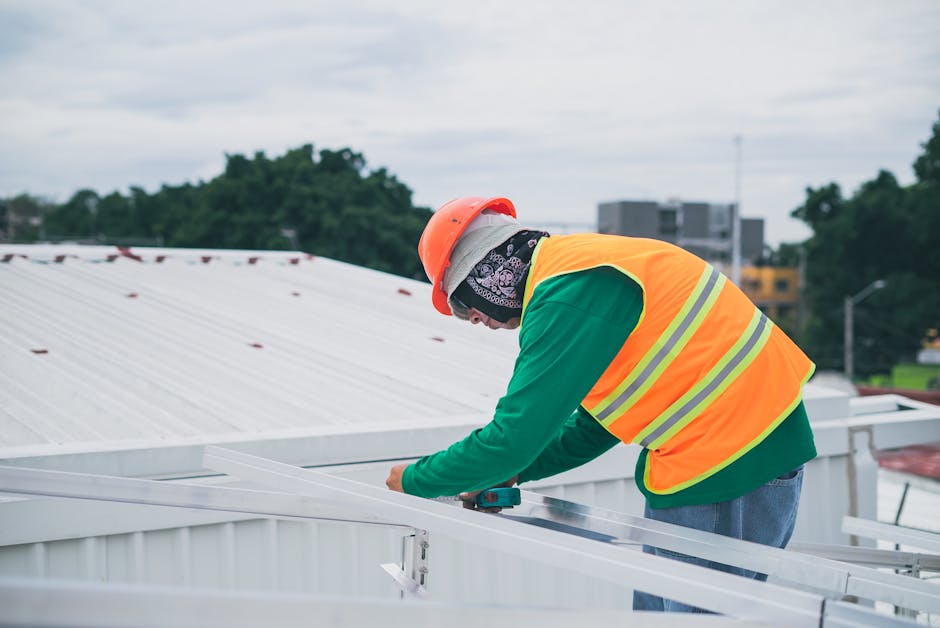
- Strict Liability and Safety Standards: Professionals adhere to strict OSHA safety standards, using fall protection and proper equipment to mitigate the inherent dangers of commercial roofing work.
Materials and Tools for a Commercial Application
When we approach a commercial emergency tarping job, we come prepared with professional-grade materials and specialized tools. These are a far cry from the light-duty tarps you might find at a hardware store.
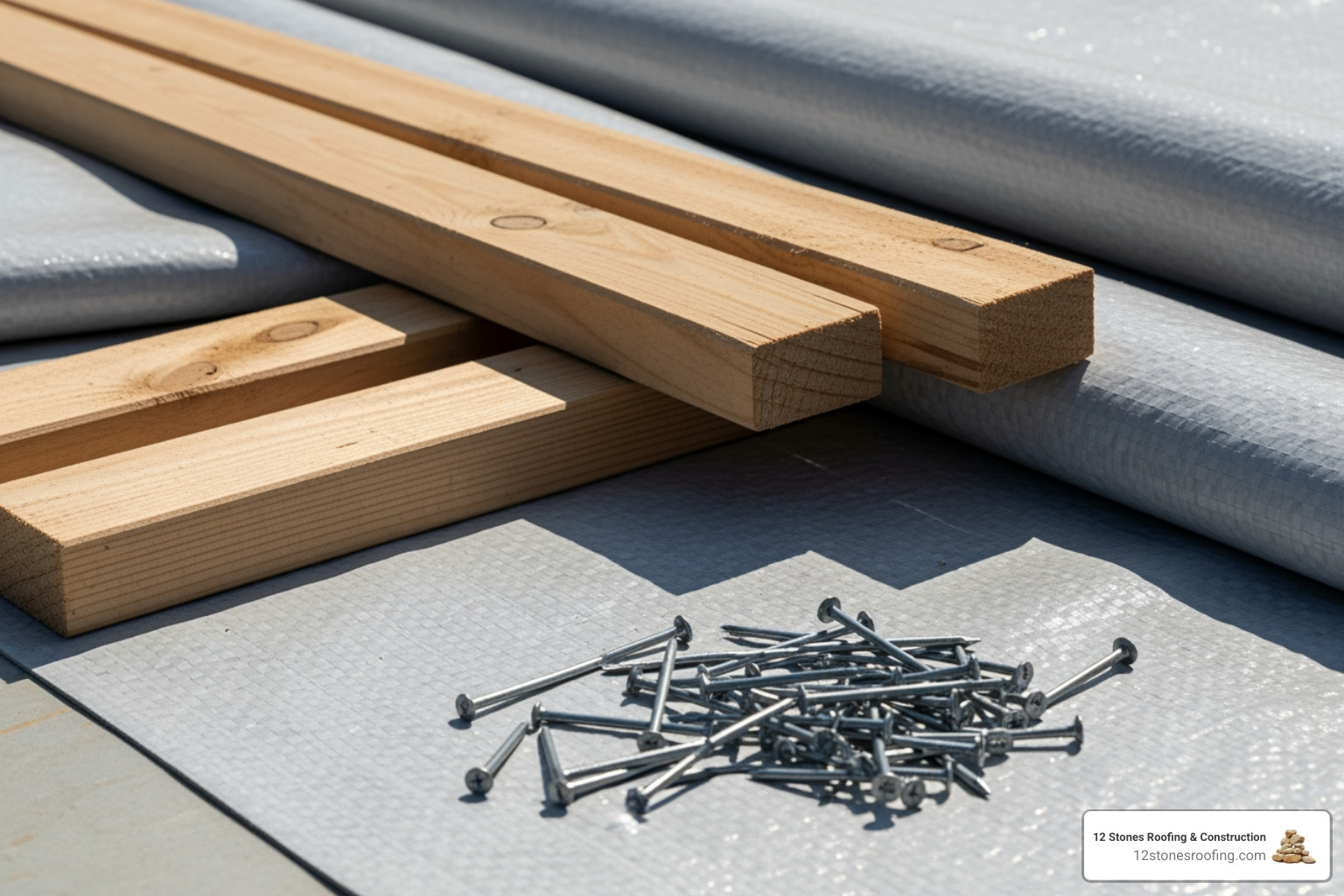
Here’s what you can expect us to use:
- Heavy-Duty, UV-Resistant Tarps: We use industrial-grade vinyl or reinforced woven polyethylene tarps (10 mil+ thick) designed to withstand harsh weather and UV exposure.
- Reinforced Grommets: Attachment points are reinforced to prevent tearing under tension.
- 2×4 Wood Planks: Used to create a secure anchor point at the tarp’s edges, distributing tension evenly to prevent tearing.
- Rubber-Washer Screws: These provide a tighter hold and create a watertight seal around the fastener, preventing new leaks.
- Industrial Sealants: High-quality sealants are used at penetrations or seams to ensure a completely watertight barrier.
- Safety Harnesses and Ropes: Fall protection is paramount. Our crew is equipped with personal fall arrest systems to prevent accidents.
- Sturdy Ladders and Lifts: Specialized ladders or lifts are often required for safe and efficient access to large commercial roofs.
- Debris Removal Tools: We use brooms, shovels, and vacuums to clear the roof surface before installation, preventing punctures.
The Professional Process for Tarping a Damaged Commercial Roof
A systematic, professional approach to tarping is essential for a damaged commercial roof. It’s a carefully orchestrated process designed to maximize protection and ensure safety. At 12 Stones Roofing & Construction, our process is built on experience and a commitment to quality. For more details on professional practices, see our Roof Tarping for Contractors guide.
Step 1: Damage Assessment and Safety Evaluation
Our first priority is a thorough damage and safety assessment to understand the scope of the damage and identify all hazards.
- Initial Site Security: We cordon off the affected area to protect everyone from falling debris.
- Structural Integrity Check: Our team visually inspects the roof for sagging, compromised decking, or other structural weaknesses.
- Identify All Puncture Points: We carefully identify every breach, crack, and weak spot where water could enter.
- Check for Electrical Hazards: We identify and mitigate risks from exposed electrical wiring near HVAC units or lighting.
- Use of Drones for Safe Assessment: We may deploy drones for a safe, aerial view of large or hazardous roofs to plan the most efficient tarping strategy.
- Weather Monitoring: We continuously monitor weather and will not begin work in unsafe conditions like high winds or lightning.
Step 2: Debris Removal and Surface Preparation
A clean surface is crucial for effective tarping. Debris left under the tarp can puncture it or prevent a watertight seal.
- Clearing Obstructions: We carefully remove all loose debris from the damaged area, including branches, glass, gravel, and nails.
- Sweeping the Surface Clean: Once larger debris is removed, we sweep the roof surface to ensure it’s as clean and smooth as possible.
- Protecting Existing Structures: We take care to avoid further damage to rooftop equipment during the cleaning process.
Step 3: Tarp Installation and Secure Fastening
This is the precise and secure installation of the commercial-grade tarp.
- Strategic Positioning: The tarp is positioned over the damaged area, extending over the peak on sloped roofs or directing water to drains on flat roofs. We ensure at least 4-5 feet of overlap on all sides for secure anchoring.
- Anchoring with Wood Planks: We anchor the tarp by wrapping its edges around 2×4 wood planks, which are then secured to the roof deck with specialized screws. This method distributes tension and resists wind uplift.
- Layered and Watertight: For larger areas, we overlap tarps like shingles to prevent water from seeping through seams. Industrial sealants may be used at critical junctions.
- Tensioning and Smoothing: The tarp is pulled taut to minimize wrinkles and prevent water from pooling, which helps it shed wind and rain effectively.
- Perimeter Security: All edges are securely fastened to ensure no loose flaps can catch wind. On flat roofs, we may use ballast (like sandbags) to further secure the tarp.
This meticulous process ensures that our commercial emergency tarping provides a robust, temporary shield against the elements.
After the Tarp: Longevity, Maintenance, and Planning for Permanent Repairs
Commercial emergency tarping is a temporary solution designed to buy you time, not to be a permanent fix. Once the threat is contained, the focus must shift to permanent roof repairs or replacement. For a detailed overview of durable options for Texas businesses, see our Commercial Roof Replacement Texas Guide, which explains how different systems perform in Gulf Coast heat, wind, and heavy rain.
How Long Can an Emergency Tarp Remain on a Commercial Roof?
A professionally installed, heavy-duty commercial tarp can last up to 90 days, but its lifespan is affected by several factors:
- UV Exposure: The intense Texas sun can degrade even UV-resistant tarps over time, making them brittle.
- Wind and Weather: Persistent high winds, heavy rain, and hail can stress the tarp and its fasteners.
- Quality of Installation: A properly installed tarp with adequate fastening will last significantly longer.
- Tarp Material: Heavy-duty vinyl or reinforced polyethylene tarps will outlast lighter, cheaper options.
Signs that an emergency tarp needs attention:
- Visible Tears or Holes: Any breach compromises its watertight integrity.
- Water Pooling: Sagging and collecting water on flat roofs indicates a problem and risks collapse.
- Loose Fasteners or Edges: If planks or grommets are pulling away, the tarp is no longer secure.
- Fading/Brittle Material: This indicates UV degradation and compromised integrity.
- Unusual Noises: Flapping or rattling sounds could mean the tarp is loose.
Regular inspections are vital. If you notice any of these signs, contact a professional immediately. For more comprehensive information, refer to our Roof Tarping Complete Guide.
The Dangers of Delaying Permanent Roof Repairs
Relying on a tarp for too long is risky. Delaying permanent repairs can lead to significant problems:
- Mold and Mildew Growth: Even a small leak can lead to costly mold growth and business disruption.
- Compromised Structural Decking: Moisture can rot wood or corrode metal decking, weakening the roof structure and leading to expensive repairs or failure.
- Damaged Insulation: Wet insulation loses its R-value, increasing energy bills and creating an environment for mold.
- Increased Final Repair Costs: A straightforward repair can become a much larger project due to secondary damage from delays.
- Potential for Catastrophic Failure: A temporary tarp cannot support a compromised roof indefinitely. Unaddressed structural issues can lead to a collapse.
- Insurance Complications: Insurers expect reasonable progress toward full restoration. Prolonged reliance on a temporary fix can complicate future claims.
Do not let a temporary fix become a permanent problem. We are here to help you transition from emergency tarping to a lasting solution that aligns with building codes, manufacturer warranties, and your long-term asset management plan.
Frequently Asked Questions about Commercial Emergency Tarping
When your commercial property is damaged, you’ll have questions. Here are some of the most common ones regarding commercial emergency tarping:
Should I attempt to tarp my commercial roof myself?
No. Due to significant safety risks, specialized equipment needs, and liability on large commercial roofs, DIY tarping is strongly discouraged. It can lead to personal injury, further property damage, and insurance claim denial. As our research highlights, “Installing a roof tarp is a temporary way to protect a damaged roof… [it] is best left to trained service professionals.”
Will my insurance policy cover the cost of emergency tarping?
Yes, most commercial property insurance policies cover commercial emergency tarping as a necessary cost to mitigate further damage. To ensure your claim is processed smoothly:
- Document Everything: Take clear photos and videos of the damage before tarping begins.
- Keep Receipts: Maintain detailed records of all costs from your professional contractor.
- Communicate with Your Insurer: Notify your insurance company as soon as possible and inform them of your plans.
Following these steps demonstrates your “duty to mitigate” and provides your insurer with the information they need.
How quickly can a professional crew respond to a tarping emergency?
Professional emergency roofing services, like those offered by 12 Stones Roofing & Construction, offer 24/7 response. Our crews can often be on-site within hours to assess the damage and begin securing your property. We understand that time is of the essence. “The sooner businesses get the necessary board-up and roof tarping services, the sooner they can recover.” Our rapid response teams are equipped and ready to deploy, especially after severe weather events common in Texas.
Secure Your Business with Professional Emergency Tarping
A damaged roof leaves your business vulnerable to devastating losses from water, weather, and theft. Taking immediate action with professional commercial emergency tarping is the most important step you can take to protect your investment and ensure a smooth recovery. While a tarp is a temporary fix, it provides the critical protection needed to plan for a permanent, high-quality repair or replacement.
For property owners in and around Pasadena, TX, partnering with a local, code-compliant contractor is essential. 12 Stones Roofing & Construction understands Harris County permitting requirements, Texas windstorm standards, and the unique demands of flat and low-slope commercial roofs in coastal climates. That local knowledge translates directly into faster response times and tarping strategies that work with your existing roofing system instead of against it.
Do not wait for a small leak to become a major disaster. If your commercial property in the Pasadena, TX area has suffered roof damage, contact the experts at 12 Stones Roofing & Construction. Call us today at (713) 715-7663 to secure your property and schedule your emergency tarping service.